
Connected Care and Remote Monitoring, Built to Fit
How Your Practice Already Works
Connected care extends your visibility into patients with chronic conditions between appointments. RemoteHCS adds that without adding to your day.
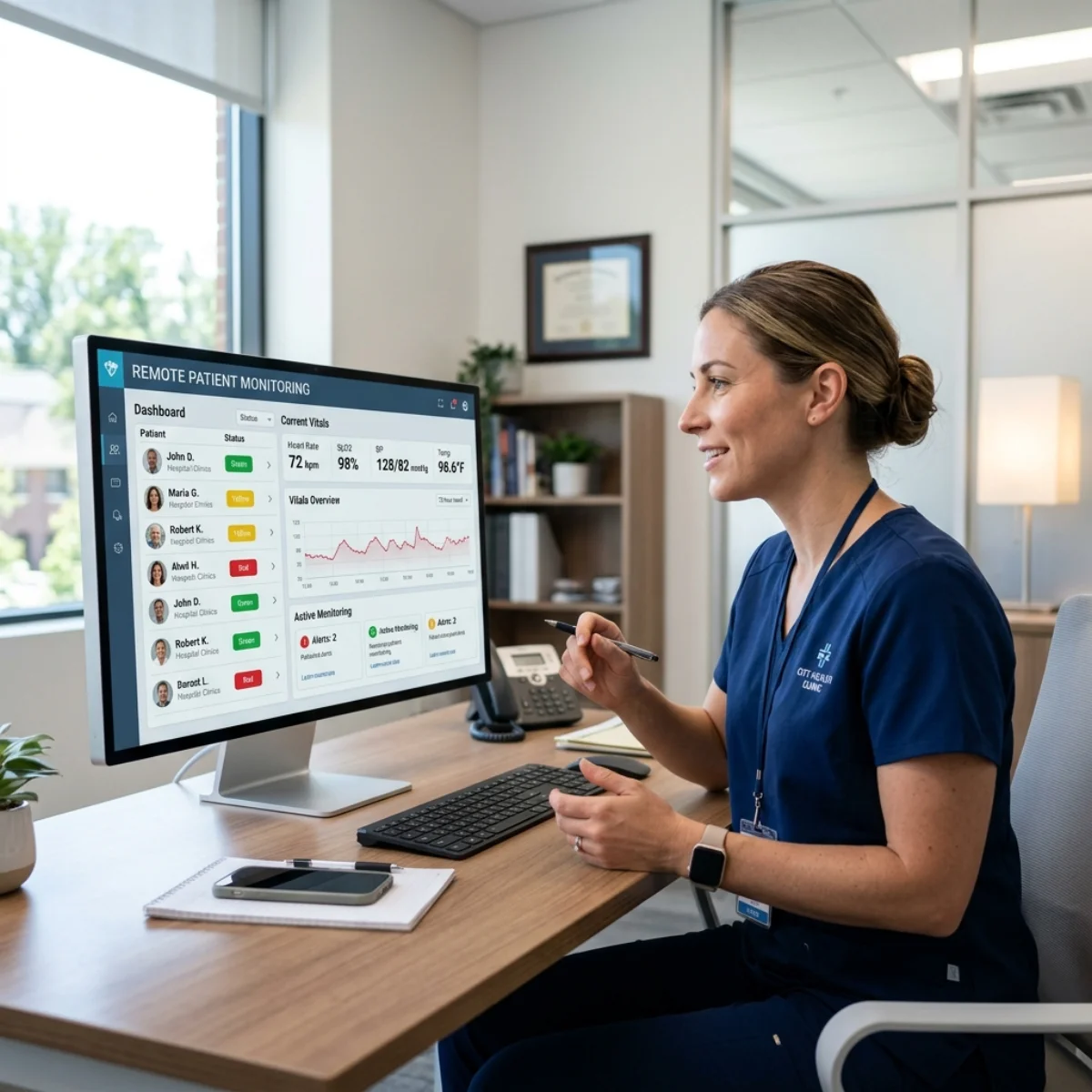
What Connected Care Means for Your Practice
Your Patients, Your Clinical Judgment
Connected care surfaces information. The care decisions stay with you.
Medicare Covers Remote Monitoring As Its Own Category
CMS has covered remote patient monitoring as its own category of service since 2018. Coverage and payment depend on the patient and plan.
HIPAA Compliance Is the Baseline, Not a Feature
Any vendor handling patient health data needs a signed Business Associate Agreement, plus real administrative, physical, and technical safeguards.
Questions Worth Asking Any Remote Monitoring Partner
These are the questions we think any practice should ask a remote monitoring partner. Call us and we will answer each one for RemoteHCS.
How is patient data protected, and is there a signed Business Associate Agreement?
Who reviews the monitoring data, and what are their clinical qualifications?
What happens when a reading falls outside a safe range for a patient?
How is monitoring activity documented for your records?
What does the practice need to do, and what does the vendor handle?
How Medicare Covers Remote Patient Monitoring
CMS breaks remote patient monitoring into three parts. Medicare policy can change, so check current CMS guidance and your own payer contracts before making plans.
Patient Setup & Education
A patient learns how to use a connected device. This helps keep the data reliable.
Device-Based Data Collection
A connected device, like a blood pressure cuff, weight scale, or pulse oximeter, sends readings in on its own.
Clinical Review & Management
A licensed clinician reviews the data along with the rest of a patient's chart to help guide care.
More on Telehealth & Remote Patient Monitoring
Visit our Resources library for guides on telehealth, chronic condition management, vital signs monitoring, and what to expect from remote patient monitoring.
Visit ResourcesFrequently Asked Questions for Practices
Will remote monitoring create extra work for my practice's existing systems?
Monitoring is meant to sit alongside your workflow, not replace part of it. Ask us how patient data reaches your records, and who maintains that link. We will walk you through it for your setup.
Does Medicare cover remote patient monitoring?
Yes. Medicare has covered remote patient monitoring as its own category since 2018, according to CMS. Medicare pays for each part separately. Coverage and payment depend on the patient, provider, and plan. Check current CMS guidance and your own payer contracts.
What does the patient experience look like from start to finish?
Patients use a connected device at home, like a blood pressure cuff, weight scale, or pulse oximeter. Readings reach their care team between visits. Call us to talk through setup and support for the patients you have in mind.
How is alert fatigue typically addressed in remote monitoring programs?
Remote monitoring programs set a level for what counts as a notable reading. They send real changes to a clinician, not every data point. Ask any vendor how their program defines and reviews an alert. This helps you decide what fits your practice.